• Hardware Platform (Jetson / GPU): GPU
• DeepStream Version: 6.3
• TensorRT Version: 8.5.3-1+cuda11.8
• NVIDIA GPU Driver Version (valid for GPU only): 525.89.02
• Issue Type( questions, new requirements, bugs): questions
When using tracking NvDCF, the results is better than Deepsort tracking, frame miss object when using pgie:
When using NvDCF:
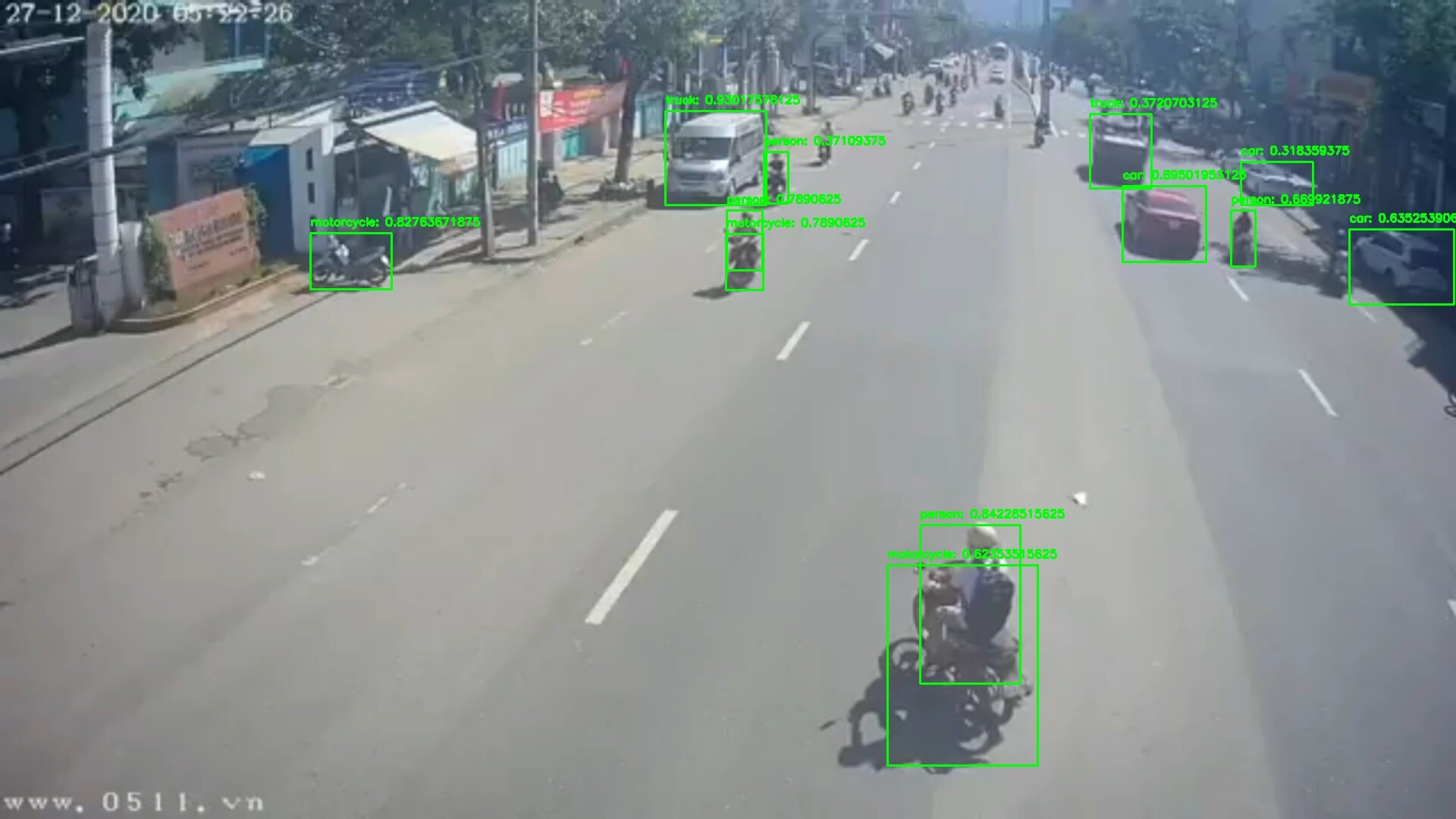
BaseConfig:
  minDetectorConfidence: 0   # If the confidence of a detector bbox is lower than this, then it won't be considered for tracking

TargetManagement:
  enableBboxUnClipping: 1   # In case the bbox is likely to be clipped by image border, unclip bbox
  maxTargetsPerStream: 150  # Max number of targets to track per stream. Recommended to set >10. Note: this value should account for the targets being tracked in shadow mode as well. Max value depends on the GPU memory capacity

  # [Creation & Termination Policy]
  minIouDiff4NewTarget: 0.5   # If the IOU between the newly detected object and any of the existing targets is higher than this threshold, this newly detected object will be discarded.
  minTrackerConfidence: 0.2   # If the confidence of an object tracker is lower than this on the fly, then it will be tracked in shadow mode. Valid Range: [0.0, 1.0]
  probationAge: 3 # If the target's age exceeds this, the target will be considered to be valid.
  maxShadowTrackingAge: 30  # Max length of shadow tracking. If the shadowTrackingAge exceeds this limit, the tracker will be terminated.
  earlyTerminationAge: 1   # If the shadowTrackingAge reaches this threshold while in TENTATIVE period, the target will be terminated prematurely.

TrajectoryManagement:
  useUniqueID: 0   # Use 64-bit long Unique ID when assignining tracker ID. Default is [true]

DataAssociator:
  dataAssociatorType: 0 # the type of data associator among { DEFAULT= 0 }
  associationMatcherType: 0 # the type of matching algorithm among { GREEDY=0, GLOBAL=1 }
  checkClassMatch: 1  # If checked, only the same-class objects are associated with each other. Default: true

  # [Association Metric: Thresholds for valid candidates]
  minMatchingScore4Overall: 0.0   # Min total score
  minMatchingScore4SizeSimilarity: 0.6  # Min bbox size similarity score
  minMatchingScore4Iou: 0.0       # Min IOU score
  minMatchingScore4VisualSimilarity: 0.7  # Min visual similarity score

  # [Association Metric: Weights]
  matchingScoreWeight4VisualSimilarity: 0.6  # Weight for the visual similarity (in terms of correlation response ratio)
  matchingScoreWeight4SizeSimilarity: 0.0    # Weight for the Size-similarity score
  matchingScoreWeight4Iou: 0.4   # Weight for the IOU score

StateEstimator:
  stateEstimatorType: 1  # the type of state estimator among { DUMMY=0, SIMPLE=1, REGULAR=2 }

  # [Dynamics Modeling]
  processNoiseVar4Loc: 2.0    # Process noise variance for bbox center
  processNoiseVar4Size: 1.0   # Process noise variance for bbox size
  processNoiseVar4Vel: 0.1    # Process noise variance for velocity
  measurementNoiseVar4Detector: 4.0    # Measurement noise variance for detector's detection
  measurementNoiseVar4Tracker: 16.0    # Measurement noise variance for tracker's localization

VisualTracker:
  visualTrackerType: 1 # the type of visual tracker among { DUMMY=0, NvDCF=1 }

  # [NvDCF: Feature Extraction]
  useColorNames: 1     # Use ColorNames feature
  useHog: 0            # Use Histogram-of-Oriented-Gradient (HOG) feature
  featureImgSizeLevel: 2  # Size of a feature image. Valid range: {1, 2, 3, 4, 5}, from the smallest to the largest
  featureFocusOffsetFactor_y: -0.2 # The offset for the center of hanning window relative to the feature height. The center of hanning window would move by (featureFocusOffsetFactor_y*featureMatSize.height) in vertical direction

  # [NvDCF: Correlation Filter]
  filterLr: 0.075 # learning rate for DCF filter in exponential moving average. Valid Range: [0.0, 1.0]
  filterChannelWeightsLr: 0.1 # learning rate for the channel weights among feature channels. Valid Range: [0.0, 1.0]
  gaussianSigma: 0.75 # Standard deviation for Gaussian for desired response when creating DCF filter [pixels]
Using Deepsort with your weight in Gst-nvtracker — DeepStream documentation
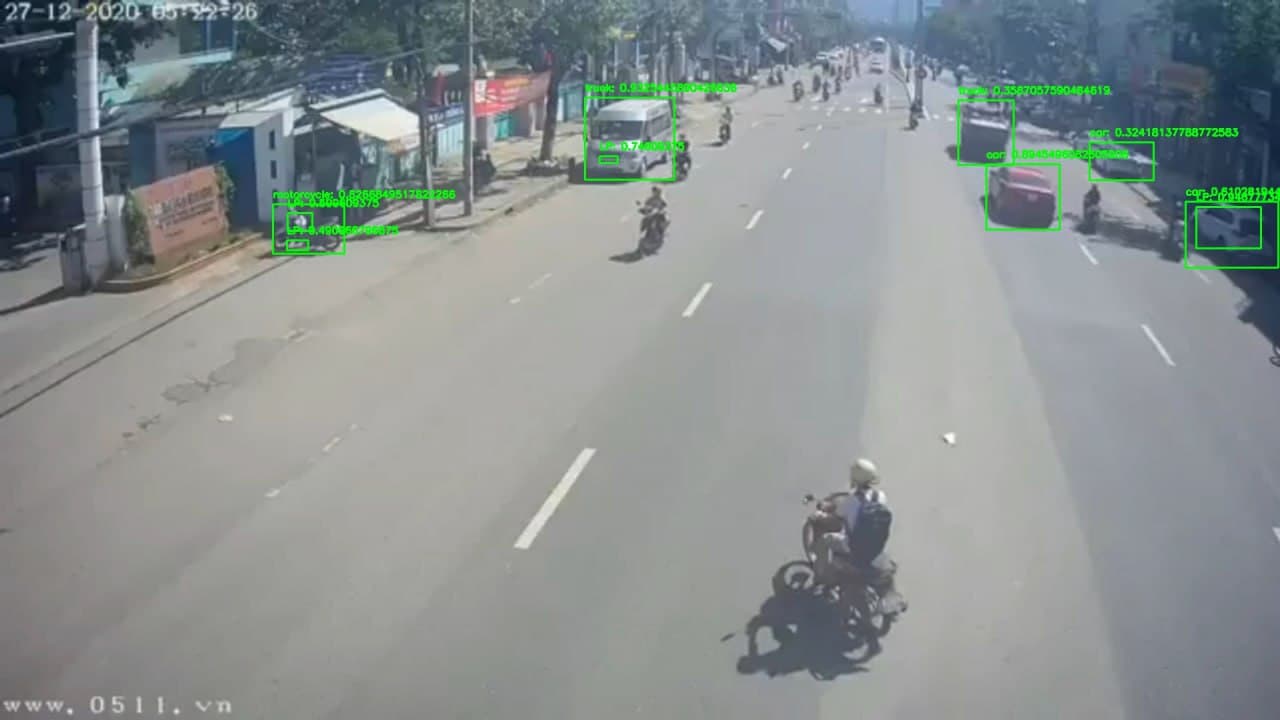
BaseConfig:
  minDetectorConfidence: 0.0762    # If the confidence of a detector bbox is lower than this, then it won't be considered for tracking

TargetManagement:
  preserveStreamUpdateOrder: 0    # When assigning new target ids, preserve input streams' order to keep target ids in a deterministic order over multuple runs
  maxTargetsPerStream: 150    # Max number of targets to track per stream. Recommended to set >10. Note: this value should account for the targets being tracked in shadow mode as well. Max value depends on the GPU memory capacity

  # [Creation & Termination Policy]
  minIouDiff4NewTarget: 0.9847    # If the IOU between the newly detected object and any of the existing targets is higher than this threshold, this newly detected object will be discarded.
  minTrackerConfidence: 0.4314    # If the confidence of an object tracker is lower than this on the fly, then it will be tracked in shadow mode. Valid Range: [0.0, 1.0]
  probationAge: 2    # If the target's age exceeds this, the target will be considered to be valid.
  maxShadowTrackingAge: 68    # Max length of shadow tracking. If the shadowTrackingAge exceeds this limit, the tracker will be terminated.
  earlyTerminationAge: 1    # If the shadowTrackingAge reaches this threshold while in TENTATIVE period, the the target will be terminated prematurely.

TrajectoryManagement:
  useUniqueID: 0    # Use 64-bit long Unique ID when assignining tracker ID.

DataAssociator:
  dataAssociatorType: 0    # the type of data associator among { DEFAULT= 0 }
  associationMatcherType: 1    # the type of matching algorithm among { GREEDY=0, CASCADED=1 }
  checkClassMatch: 1    # If checked, only the same-class objects are associated with each other. Default: true

  # [Association Metric: Mahalanobis distance threshold (refer to DeepSORT paper) ]
  thresholdMahalanobis: 12.1875    # Threshold of Mahalanobis distance. A detection and a target are not matched if their distance is larger than the threshold.

  # [Association Metric: Thresholds for valid candidates]
  minMatchingScore4Overall: 0.1794    # Min total score
  minMatchingScore4SizeSimilarity: 0.3291    # Min bbox size similarity score
  minMatchingScore4Iou: 0.2364    # Min IOU score
  minMatchingScore4ReidSimilarity: 0.7505    # Min reid similarity score

  # [Association Metric: Weights for valid candidates]
  matchingScoreWeight4SizeSimilarity: 0.7178    # Weight for the Size-similarity score
  matchingScoreWeight4Iou: 0.4551    # Weight for the IOU score
  matchingScoreWeight4ReidSimilarity: 0.3197    # Weight for the reid similarity

  # [Association Metric: Tentative detections] only uses iou similarity for tentative detections
  tentativeDetectorConfidence: 0.2479    # If a detection's confidence is lower than this but higher than minDetectorConfidence, then it's considered as a tentative detection
  minMatchingScore4TentativeIou: 0.2376    # Min iou threshold to match targets and tentative detection

StateEstimator:
  stateEstimatorType: 2    # the type of state estimator among { DUMMY=0, SIMPLE=1, REGULAR=2 }

  # [Dynamics Modeling]
  noiseWeightVar4Loc: 0.0503   # weight of process and measurement noise for bbox center; if set, location noise will be proportional to box height
  noiseWeightVar4Vel: 0.0037    # weight of process and measurement noise for velocity; if set, velocity noise will be proportional to box height
  useAspectRatio: 1    # use aspect ratio in Kalman filter's observation

ReID:
  reidType: 1    # The type of reid among { DUMMY=0, DEEP=1 }

  # [Reid Network Info]
  batchSize: 100    # Batch size of reid network
  workspaceSize: 1000    # Workspace size to be used by reid engine, in MB
  reidFeatureSize: 256    # Size of reid feature
  reidHistorySize: 100    # Max number of reid features kept for one object
  inferDims: [3, 256, 128]    # Reid network input dimension CHW or HWC based on inputOrder
  networkMode: 1    # Reid network inference precision mode among {fp32=0, fp16=1, int8=2 }

  # [Input Preprocessing]
  inputOrder: 0    # Reid network input order among { NCHW=0, NHWC=1 }. Batch will be converted to the specified order before reid input.
  colorFormat: 0    # Reid network input color format among {RGB=0, BGR=1 }. Batch will be converted to the specified color before reid input.
  offsets: [123.6750, 116.2800, 103.5300]    # Array of values to be subtracted from each input channel, with length equal to number of channels
  netScaleFactor: 0.01735207    # Scaling factor for reid network input after substracting offsets
  keepAspc: 1    # Whether to keep aspc ratio when resizing input objects for reid

  # [Output Postprocessing]
  addFeatureNormalization: 1 # If reid feature is not normalized in network, adding normalization on output so each reid feature has l2 norm equal to 1

  # [Paths and Names]
  tltEncodedModel: "/opt/nvidia/deepstream/deepstream/samples/models/Tracker/resnet50_market1501.etlt" # NVIDIA TAO model path
  tltModelKey: "nvidia_tao" # NVIDIA TAO model key
  modelEngineFile: "/opt/nvidia/deepstream/deepstream/samples/models/Tracker/resnet50_market1501.etlt_b100_gpu0_fp16.engine" # Engine file path
**How to change the parameter for not miss object detection
**